
Stick Season
"I see you [...] in Maine and at home in Vermont, everywhere I turn. You are still with me, Colleen. You will always be with me." --the final sentence of the author's memoir.

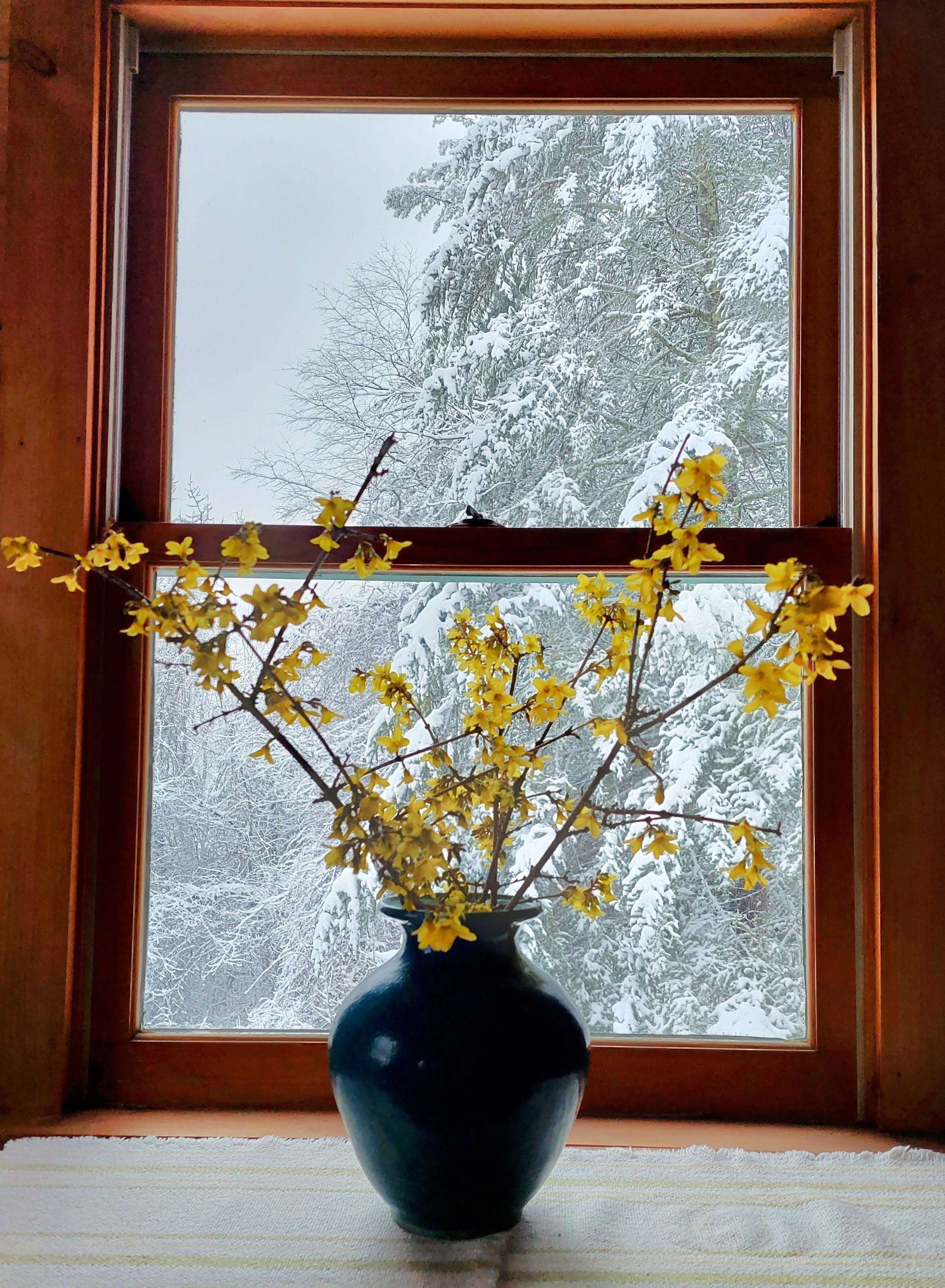
I experience every day I spend in nature as an opportunity to look at the world with fresh eyes. No two days are the same out there, in any natural setting. Year-round, I hike the same trails in the forest behind my home—a large, wooded area that abuts my property. Sometimes I am on cross-country skis, sometimes I am in snowshoes. Most of the year I wear hiking boots (sometimes with ice grippers on the bottoms) or cross-trainers. I used to bicycle those hilly trails, but not anymore; I ride my bike elsewhere on graded dirt roads now. Still, I have multi-ways of enjoying that woods, and what I have found is that the forest doesn’t change just season to season, but also day to day. Hour by hour, really, as the light (and weather) shifts.
I hike (and do all the other activities mentioned above) in other places around the county as well, but there is something about having a place that I call my own in nature. I am fortunate not to have to get into a vehicle to get to my place. I have been enjoying those trails for over thirty years. I never tire of them. They are my home as much as the center-chimney log Cape Cod style house we built on the edge of this forest thirty-two years ago. Sometimes I bring friends into the woods, but mostly I go alone.
I take photos when I am out in nature, in part because I like the way photography gets me to slow down and observe more closely. Observing nature has been one of the most joyful experiences of my life, ever since I was a young child.
It’s stick season now in Vermont, a term that is more often applied to November but works for late March/early April as well. There is no foliage on the deciduous trees and the spring ephemerals have not yet appeared. Those spring wildflowers that I look forward to each year are fleeting, but they are glorious after a long Vermont winter.
Colleen’s life was also fleeting, I think as I walk in the woods. The older I grow, the more fleeting even an average-lengthened life feels to me. But Colleen’s? Way too short. Way too fleeting. Twenty-seven is a young age for dying. With her 35th birthday approaching in May, I begin to think about the ornamental trees that will bloom in Northern New England, once the early spring rains have passed and the sun shines often. They say that April is a heartbreaker in New England (we have had some big winter-style storms in April more times than I care to remember), but Apil also carries the promise of May.
I wrote my memoir about raising and losing Colleen because I had a story to tell that I thought could be a moving one for readers. I also, it turned out, gained from putting some parameters around that story. By giving voice to much of what transpired throughout her short life and leading up to her death, I managed to contain my memories to the essence of the story. I do, of course, recall incidences that were not included in my written telling, but I stand by the book I wrote as an accurate depiction of what really mattered about her life and death. I am realizing, increasingly, that telling that story has served to keep her life meaningful.
When Colleen was young, she walked in my woods with me. As she grew older, I often took to the woods alone; the forest was a good place for me to think about her struggles and how I might best respond to her. Now I carry my memories of this remarkable person with me when I am in nature; I carry her with me at the seashore as well as in the woods. We loved the shore together. But, more often, I am in the woods, and I love having my silent companion along, regardless of the season.
You write so beautifully, Ann. And I responded deep under my ribs.
It is amazing how different the woods are every time we look.
You might be interested in this blog post about paying attention to the seconds of life.
https://writerunboxed.com/2015/07/22/one-second-of-detail/